Protecting Data Privacy as a Caregiver
If you use digital caregiving tools, including apps like SimpliHere, to coordinate care and communicate about your loved one or client’s health, it is incredibly important that you ensure the tools you are using are HIPAA-complaint and safeguarding your loved one or client’s privacy. Here’s why.
While daily caregiving is still fundamentally a hands-on experience, the truth is, it is equally a digital experience. Every day, families and professional caregivers share diagnoses, care notes, voice samples, behavioral data, and real-time health updates online and between devices. This data is deeply personal—and, once shared, it is nearly impossible to take back. Today, health data privacy—HIPAA compliance—matters more than ever in digital caregiving tools.
HIPAA—What is it, and why should I care?
As a caregiver, it is fundamentally important that you have a basic understanding of patient data privacy law called HIPAA (short for Health Insurance Portability and Accountability Act, and pronounced “hip-ah,” like “skipper” with a New England accent!). Since 1996, HIPAA has ensured, among other things, that there are national standards in place to protect sensitive patient health information (called Protected Health Information, or PHI) to ensure confidentiality, limits use and access to PHI, and the patient’s right to access and correct their own health data and records.
HIPAA holds health care providers—everyday people like patient care assistants, nurses, doctors, administrators, and other health care technicians—accountable for privacy violations, and the correct handling of PHI is a big part of job training for health care workers. Any hospital employee can fill you in on annual HIPAA compliance testing! Data privacy is serious stuff.
And professional and familial caregivers should care about PHI protections, especially in the digital tools they use daily. Why? Because there is the risk of serious personal impacts if privacy is violated, like:
- Identity theft
- Medical fraud
- Emotional harm or stigma from data exposure
- Loss of dignity when deeply personal details are mishandled
- Risk of misuse by AI systems trained on improperly protected data
- Indefinite storage, creating risk for hacking, sale, or theft in the future
- The sale or reuse of data
- No clear disclosure of how data will be used
No one wants any of these things to happen to their loved one or client. That’s why it is critically important that you ensure, as a caregiver, that you are using digital tools that are secure, HIPAA compliant, and that are rigorously safeguarding their privacy.
Protecting Data Privacy in Digital Caregiving Tools: A Practical checklist for caregivers
Here is what you can do as a caregiver to help protect your loved one or client’s PHI when you use digital caregiving tools:
- Read Privacy Policies: Before you use an app, or even before you use an app you’ve already downloaded again, read the privacy policies (or at least summaries). They will tell you how data is stored and protected, and if this is not clear or readily available information, ask. Many app developers will respond to inquiries, and if they don’t, that may tell you what you need to know about how concerned the company is with data privacy.
- You can learn an app’s privacy policy on its app store page (like in the Apple App Store, or Google Play), in the details/”About” section, within the app’s settings or “About” menu, or sometimes linked in the footer of the app’s website. This text should detail data collection, usage, and sharing practices.
- Read Data Permissions: Check what data apps access (like location, contacts, photos) and disable unnecessary access in your phone or tablet device settings.
- Cautiously Upload and Share: Be very cautious with uploading and sharing a loved one or client’s voice, video, and behavioral data. Sometimes, this data is sold or used for AI education.
- Debunk a Common Myth / Misconception: Communication with family members is NOT prohibited by HIPAA. It’s a common misconception that HIPAA prohibits communication with a patient’s family members. This is not true. HIPAA permits providers to share information with family, caregivers, and friends, as long as the patient agrees. Set up a healthcare proxy agreement if you are that person for your loved one.
- Use strong passwords and store them properly.
- Beware of phishing and other scams! If you receive an email or text purportedly from the maker of a digital tool you use, be cautious before you click on any link or provide your own information or that of your client or loved one.
SimpliHere is a Safe Tool
You’re on our blog, so you must already know that SimpliHere approaches privacy and trust as one of our core values. You are safe with us! At SimpliHere, we believe that privacy is a form of respect, and that trust is foundational in caregiving.
Our app design decisions are guided by dignity, not just convenience. And, importantly, SimpliHere is currently undergoing the HIPAA compliance process so that families can expect:
- Encryption and secure storage
- Clear consent and transparency
- Ability to access or delete their data
- No sale or secondary use without explicit permission
- Ability for the patient/client to consent to sharing their interactions with their caregiver with other family members.
It is an unprecedented time in healthcare history, with the advent and incorporation of digital tools and AI into healthcare and caregiving, but these tools also provide countless opportunities—and hope—for better outcomes, better quality of life. We encourage you to leverage digital tools in your caregiving, because they really do transform the experience for caregivers and patients alike, but we hope you will do your homework first, and we’re here to help with it.
To download SimpliHere at the App Store (and read our privacy policy!), click here. To learn more about HIPAA and private health information protections, click here.
About SimpliHere
The mission of SimpliHere is to ensure efficient care and peace of mind for caregivers and their patients with neurological conditions that impact communication and mobility. Joanna Rosenberg founded SimpliHere to address communication gaps between caregivers and patients. Her personal experience when her mother lived with ALS exposed the challenges of communicating and understanding basic needs, as well as managing daily tasks. Download SimpliHere today or subscribe to the Compass blog to help you navigate caregiving and learn from other community members who have been in your shoes.
Recent Posts
-
 400 Million Voices: What Rare Disease Day Taught Us This Year
 -
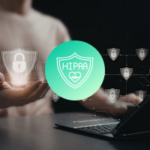 A Practical List of Steps You Can Take to Protect Privacy as a Caregiver
 -
 A Year of Voice, Community, and Navigating Caregiving: Our 2025 Compass Recap
 -
 Four Ways Caregiver Action Network Empowers Families
 -
 Cheat-Sheet: Our Top 7 Digital Augmentative and Alternative Communication (AAC) Apps of 2025